Reliable Test Equipment Manufacturer
Reliable Test Equipment Manufacturer
|
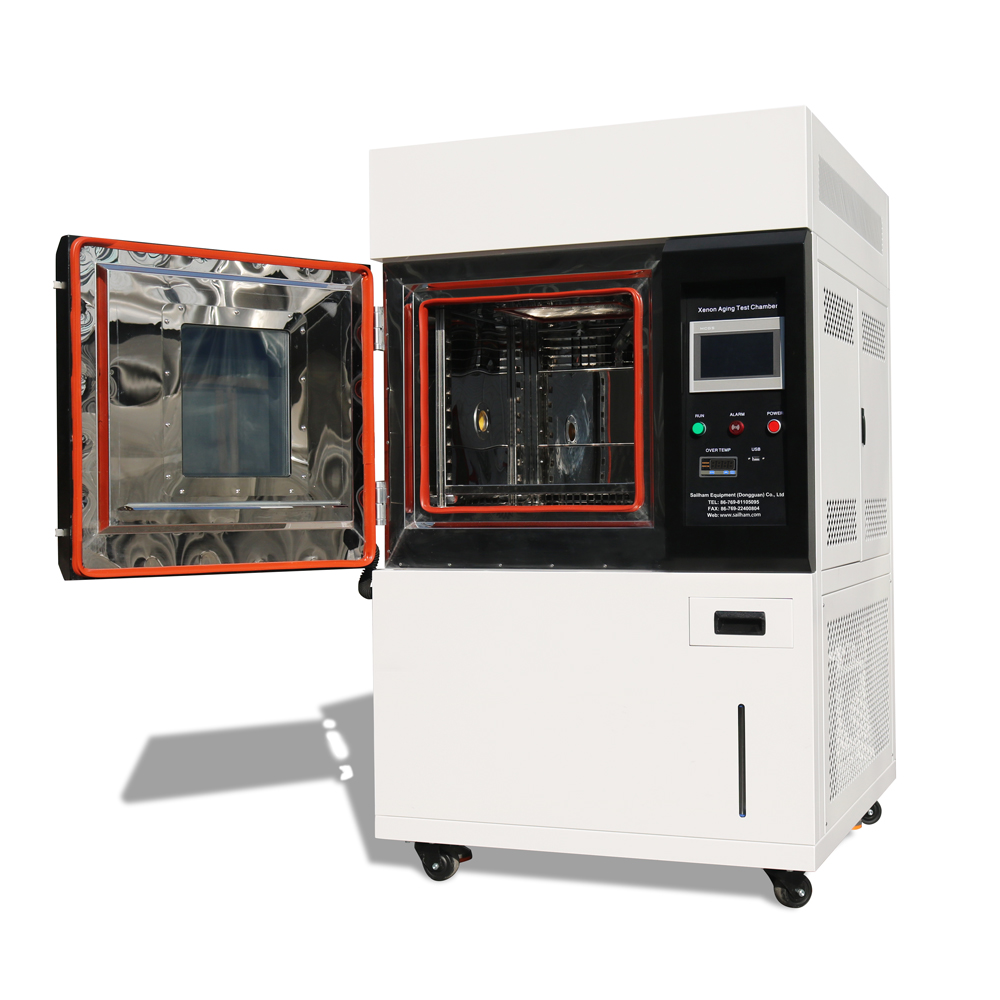
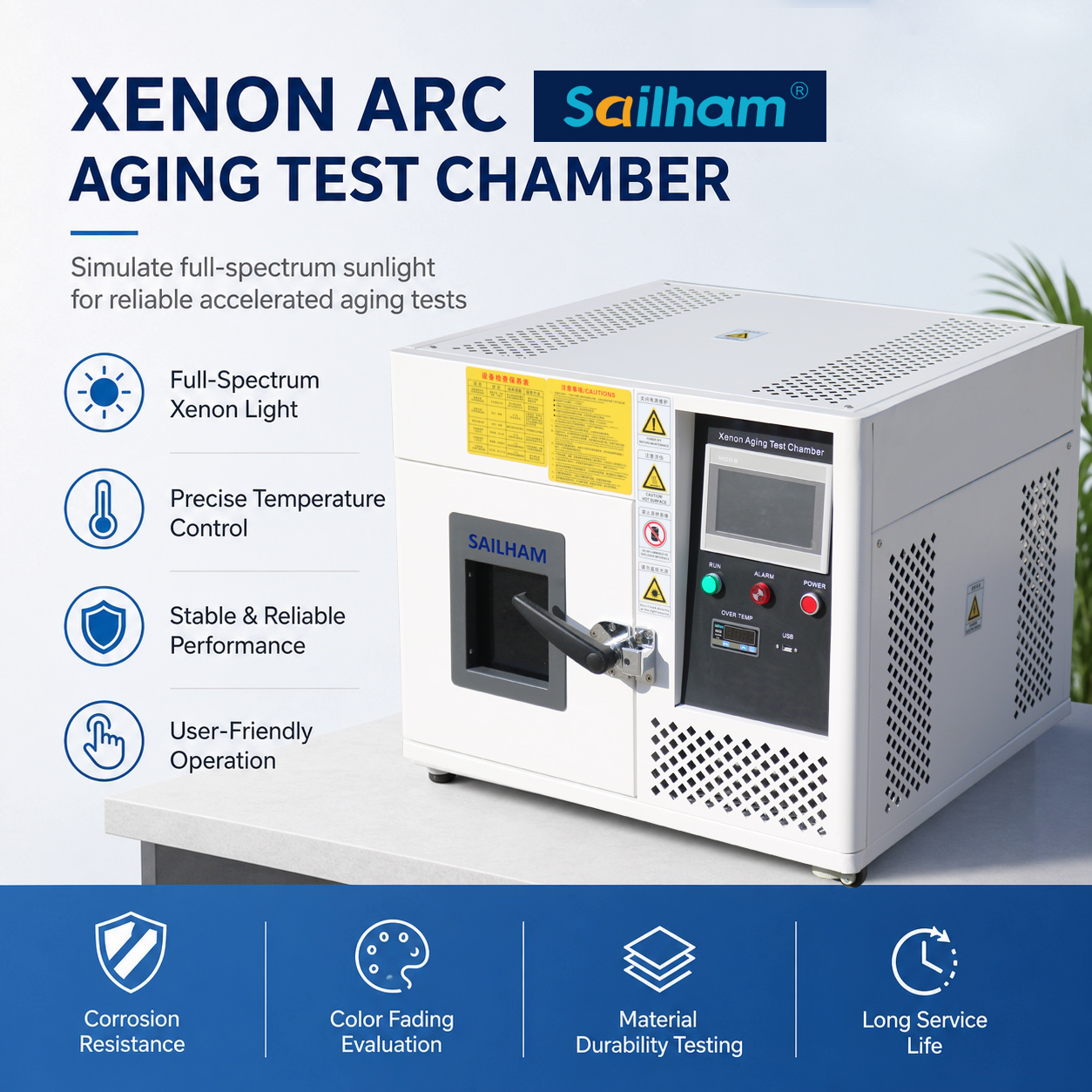
Xenon Arc Test Chamber Reliable Accelerated Weathering Testing Equipment
Telephone:+86 13018663273
Mail:carleen@sailham.com
|
Outdoor products must withstand more than sunlight. Continuous exposure to radiation, heat, humidity, rain, and changing environmental conditions can gradually change the appearance and performance of a material. A Xenon Arc Test Chamber provides manufacturers with a controlled method for evaluating these effects before products are exposed to real-world conditions.
Using a xenon arc light source and controlled environmental conditions, the chamber helps laboratories study material aging, color changes, surface degradation, and other weathering-related failures.
A product may look stable during initial quality inspection but gradually deteriorate after months of outdoor exposure. UV and visible light can contribute to fading and discoloration, while heat and moisture may accelerate physical or chemical degradation.
Outdoor exposure tests are useful, but they are affected by local weather and seasonal changes. Laboratory testing offers a more controlled alternative for comparing materials and product designs.
With a Xenon Arc Test Chamber, manufacturers can establish repeatable exposure conditions and compare samples under the same testing program.
The testing process can be used to investigate changes in both appearance and physical performance.
Depending on the material and test method, laboratories may evaluate:
Color and appearance
Determine whether a material experiences fading, discoloration, gloss loss, or visible surface changes.
Physical properties
Compare changes in strength, flexibility, hardness, elongation, or other material characteristics after exposure.
Surface durability
Identify cracking, chalking, peeling, embrittlement, or other forms of surface deterioration.
Coating performance
Evaluate the weather resistance of paints, coatings, and protective finishes.
These results can help engineers determine whether a material is suitable for outdoor applications.
The equipment can serve a broad range of industries.
Automotive manufacturers and suppliers use accelerated weathering tests to evaluate exterior plastics, interior components, coatings, lighting-related materials, and other parts that may experience long-term environmental exposure.
Plastic products can undergo color changes, embrittlement, and surface degradation when exposed to light and moisture. Xenon arc testing helps manufacturers compare formulations and improve weather resistance.
Coating manufacturers can use controlled exposure tests to compare formulations and study changes in color, gloss, adhesion, and surface condition.
Roofing products, profiles, panels, sealants, textiles, and other outdoor materials may benefit from accelerated weathering evaluation before commercial use.
Product housings and components exposed to indoor or outdoor light can also be tested to evaluate appearance and material stability.
Different products require different exposure programs. For this reason, the test chamber can provide adjustable environmental parameters rather than relying on a single fixed test condition.
Depending on the model, users can set exposure intensity, temperature, humidity, moisture cycles, and test duration. Programmable operation makes it easier to create repeatable testing procedures for different products.
The combination of light and moisture exposure is particularly useful when studying materials intended for outdoor applications.
One of the biggest benefits of accelerated weathering is its role in product development. Instead of waiting for long-term natural exposure results, engineers can obtain comparative information within a controlled laboratory program.
This can help companies:
Screen new materials faster
Compare competing formulations
Improve coating performance
Investigate premature aging
Support quality control
Reduce development risks
Improve product durability
The purpose is not simply to make testing faster, but to create useful and repeatable information that supports engineering decisions.
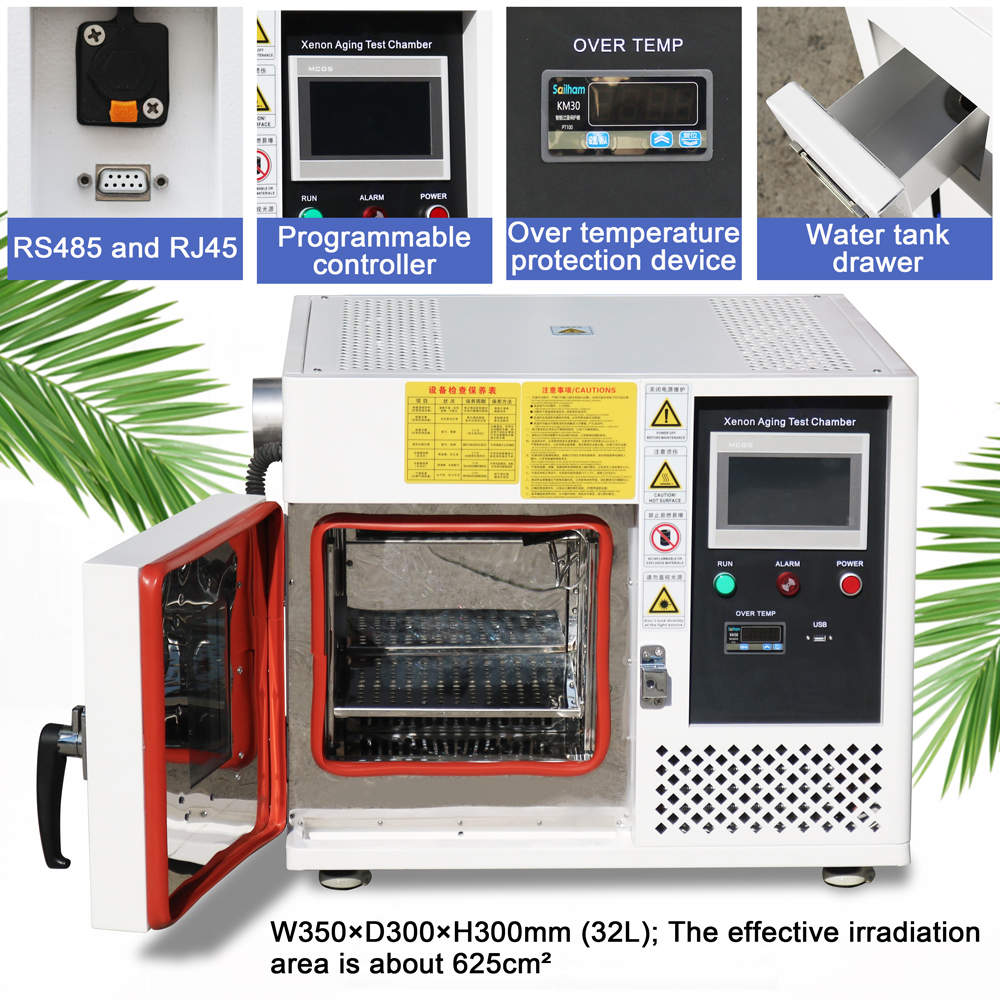
When selecting a Xenon Arc Test Chamber, buyers should consider more than the chamber size. Important factors include the required test standard, irradiance control, temperature range, humidity control, moisture exposure method, specimen capacity, controller functions, and long-term operating stability.
For laboratories working with multiple materials, programmable test cycles and reliable parameter monitoring can also improve testing efficiency.
A Xenon Arc Test Chamber offers a practical way to investigate how materials respond to controlled light, heat, and moisture exposure. It can support research, product development, quality assurance, and comparative material testing across many industries.
By combining controlled environmental conditions with accelerated exposure, xenon arc testing gives manufacturers valuable insight into long-term material durability and helps them develop products better suited to demanding service environments.
Phone
+86 13018663273
carleen@sailham.com