
Reliable Test Equipment Manufacturer
Reliable Test Equipment Manufacturer
As global industries accelerate the development of autonomous vehicles, outdoor 5G infrastructure, and smart consumer electronics, the demand for ruggedized, weather-proof components has hit an all-time high. To address the critical industry challenge of moisture-induced field failures, leading reliability testing equipment manufacturers are rolling out next-generation rain spray test chambers engineered to deliver unprecedented precision in water ingress simulation.
Water penetration remains one of the primary catalysts for electronic short circuits and material degradation. This architectural press release explores how modern environmental simulation technology is reshaping quality assurance and helping global brands achieve strict compliance with international waterproofing standards.
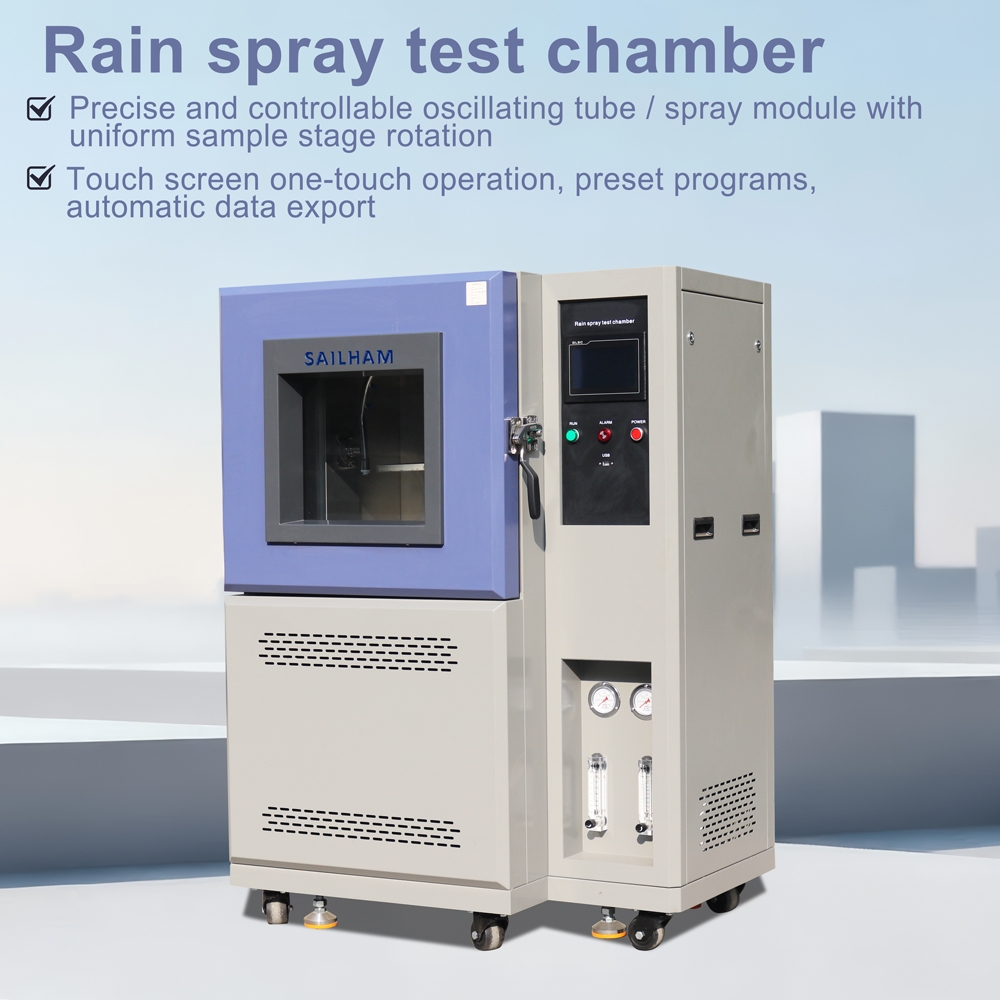
Modern manufacturing leaves no room for ambiguity. Products destined for outdoor or harsh environments must achieve verified Ingress Protection (IP) ratings, primarily governed by IEC 60529 and ISO 20653. The latest water ingress test chambers are engineered as multi-functional systems capable of executing precise testing protocols across various severity levels:
IPX3 & IPX4 standard replication: Utilizing precision-engineered oscillating tubes to simulate light rain and multidirectional splashing.
IPX5 & IPX6 high-pressure validation: Deploying specialized water jet nozzles ($6.3\text{ mm}$ and $12.5\text{ mm}$ respectively) to replicate heavy downpours, severe storms, and maritime conditions.
By integrating these diverse capabilities into a single enclosure, reliability laboratories can seamlessly transition between different testing phases, significantly reducing testing cycles and accelerating time-to-market for new product lines.
The transition from basic water-spraying boxes to intelligent environmental reliability testing apparatuses represents a major technological leap. According to recent industry literature and engineering benchmarks, three major technical innovations define today's premium rain chambers:
To satisfy strict laboratory audit requirements, the latest chambers feature digital electromagnetic flowmeters coupled with Variable Frequency Drive (VFD) water pumps. This setup allows the control system to automatically counteract external facility water pressure fluctuations, maintaining a perfectly steady flow rate throughout long-cycle tests.
With manufacturing facilities pushing for greener operations, modern chambers are built with integrated, multi-stage water filtration and eco-recycling reservoirs. This allows the system to continuously purify and reuse water during extensive IPX3 through IPX6 cycles, cutting water consumption by up to 80% compared to traditional open-drain systems.
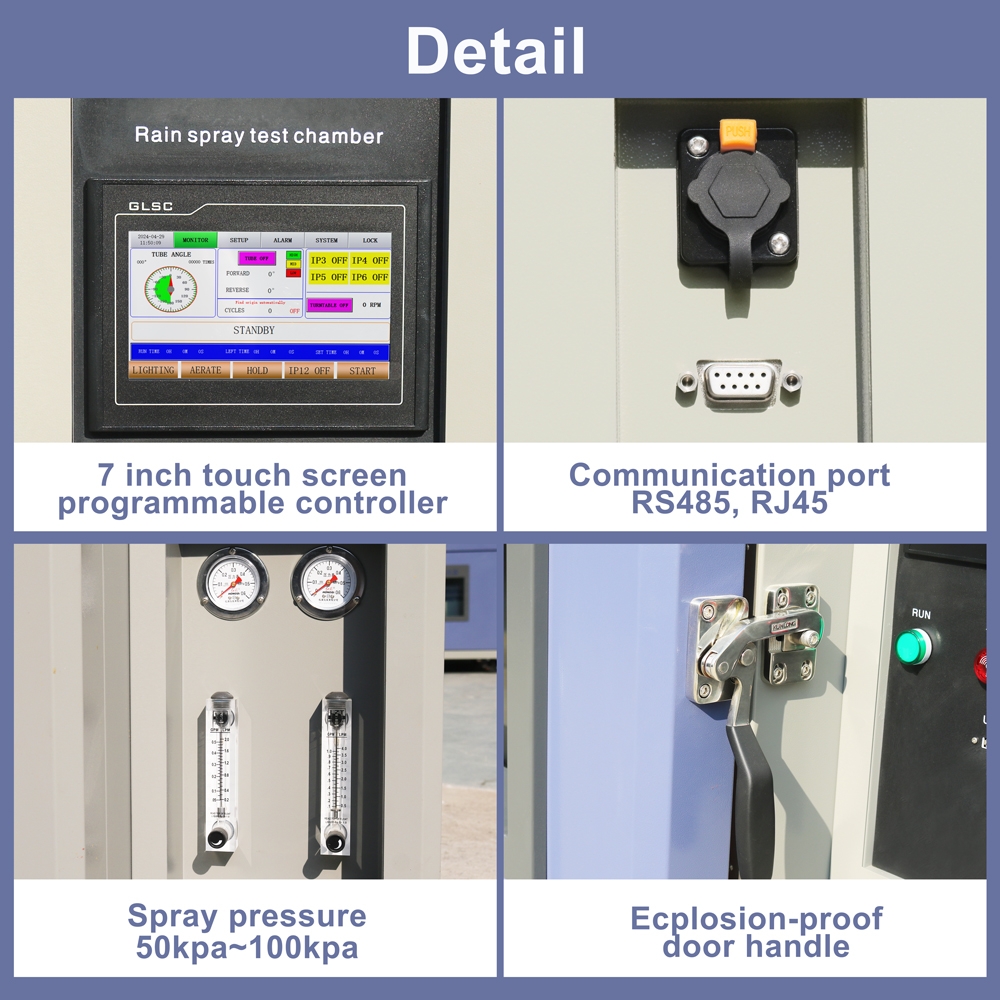
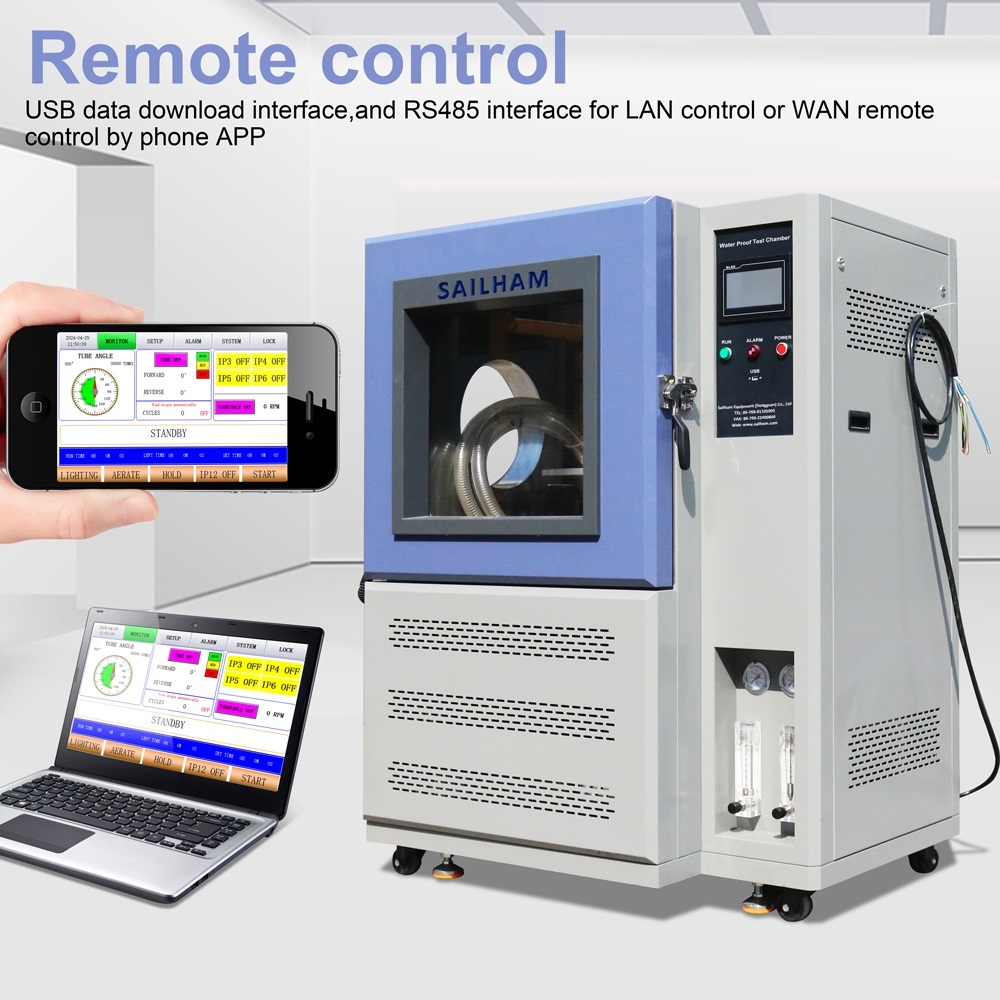
Advanced Programmable Logic Controllers (PLCs) featuring intuitive touchscreens now come pre-loaded with global standard profiles. Engineers can execute complex, multi-angle tests with a single touch, while the system logs real-time data on water pressure, flow rates, and turntable rotation speeds—creating an unalterable digital paper trail for compliance certification.
The application of advanced rain spray test chambers spans across multiple high-tech supply chains:
The EV Revolution: Electric vehicle battery packs and ADAS (Advanced Driver Assistance Systems) sensors are highly vulnerable to high-pressure road spray. Precision rain testing ensures these high-voltage systems remain completely sealed.
Telecommunications Infrastructure: With the expansion of 5G and satellite ground stations, outdoor electronic enclosures must withstand decades of continuous meteorological exposure without signal degradation.
Smart Grid & Solar Energy: Solar inverters and outdoor meters rely on certified IP ratings to protect critical internal grids from moisture-induced insulation breakdown.
Phone
+86 13018663273
carleen@sailham.com