
Reliable Test Equipment Manufacturer
Reliable Test Equipment Manufacturer
In today’s highly competitive manufacturing landscape, product reliability is a non-negotiable cornerstone of brand reputation. From consumer electronics and automotive components to aerospace engineering and pharmaceuticals, products are constantly exposed to diverse and often extreme environmental conditions. To guarantee performance, longevity, and safety, manufacturers rely on specialized testing equipment.
At the heart of this quality assurance process is the climate test chamber. This article explores the technical foundations, core applications, and critical selection criteria of climate test chambers, serving as a comprehensive guide for quality control managers and reliability engineers.
What is a Climate Test Chamber?
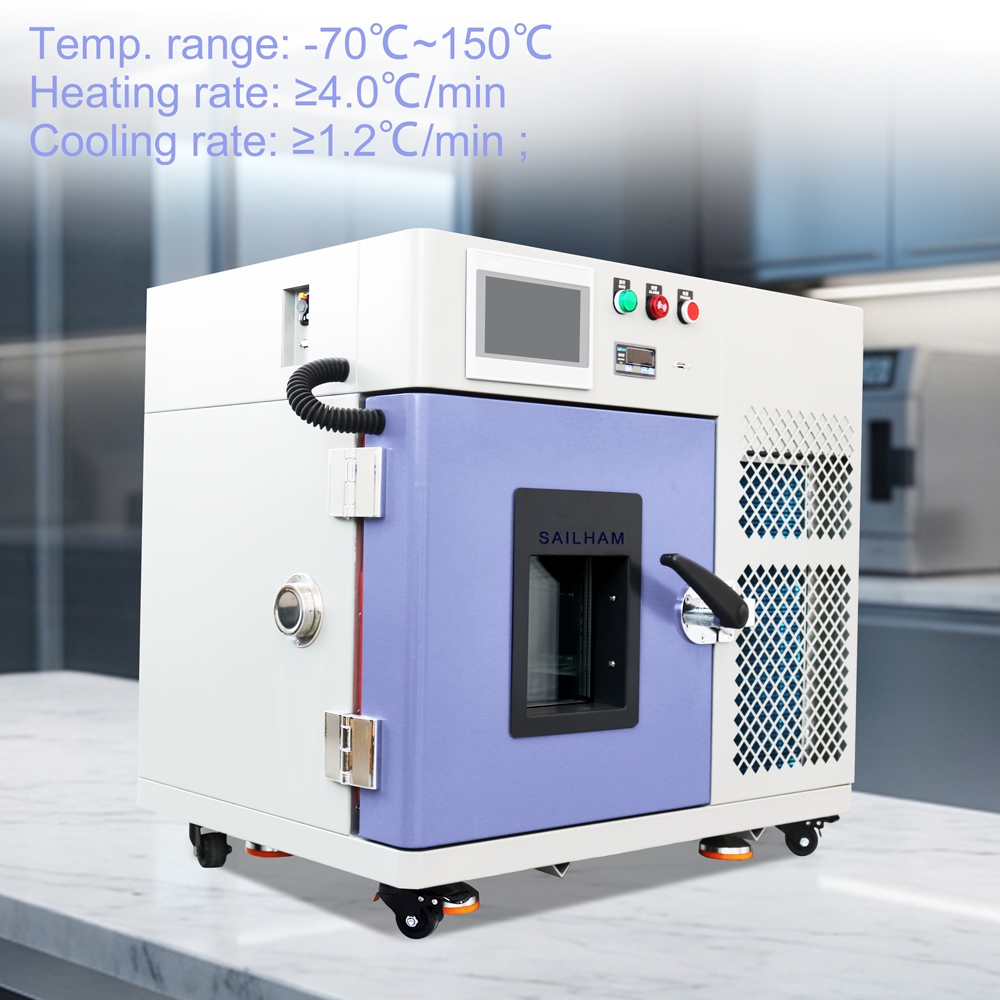
A climate test chamber (also commonly referred to as an environmental test chamber) is a controlled enclosure designed to replicate specific temperature, humidity, and atmospheric conditions. By subjecting materials, components, or finished products to these simulated environments, manufacturers can accelerate the aging process, uncover latent design flaws, and validate performance under extreme stress.
The Physics of Environmental Simulation
Climate test chambers operate on advanced thermodynamic and moisture-control principles. They utilize precise refrigeration loops, heating elements, and steam or ultrasonic humidification systems to achieve exact setpoints. Modern chambers are engineered to maintain high spatial uniformity and temporal stability, ensuring that every part of the test specimen experiences the exact same conditions.
Core Applications and Testing Standards
Climate test chambers are indispensable across various industries, each requiring adherence to strict international compliance frameworks.
1. Electronics and Semiconductor Testing
Electronic components are highly sensitive to thermal fluctuations and moisture ingress. Common testing methodologies include:
High-Temperature Operating Life (HTOL): Assessing long-term reliability under elevated temperatures.
Temperature Cycling: Alternating between extreme hot and cold to induce thermal expansion stress, identifying weak solder joints or delamination.
Steady-State Humidity Testing: Evaluating the effects of moisture absorption on insulation resistance and corrosion.
2. Automotive and Aerospace Engineering
Automotive parts and aerospace systems must endure rapid altitude-driven temperature drops and intense ambient heat. Environmental testing often complies with rigorous standards such as MIL-STD-810 (defense) and ISO 16750 (automotive electronics), which dictate specific profiles for thermal shock, humidity cycles, and frost resistance.
3. Pharmaceuticals and Life Sciences
In the pharmaceutical sector, climate test chambers are utilized for stability testing under guidelines set by the International Council for Harmonisation (ICH). These tests (e.g., ICH Q1A) simulate long-term, intermediate, and accelerated storage conditions (such as 40℃/75% RH)to determine the shelf-life and degradation pathways of active pharmaceutical ingredients (APIs).
Key Technical Features of Modern Climate Test Chambers
When manufacturing or purchasing high-performance testing equipment, several engineering features dictate the chamber's capability and efficiency.
Feature | Technical Description | Industry Benefit |
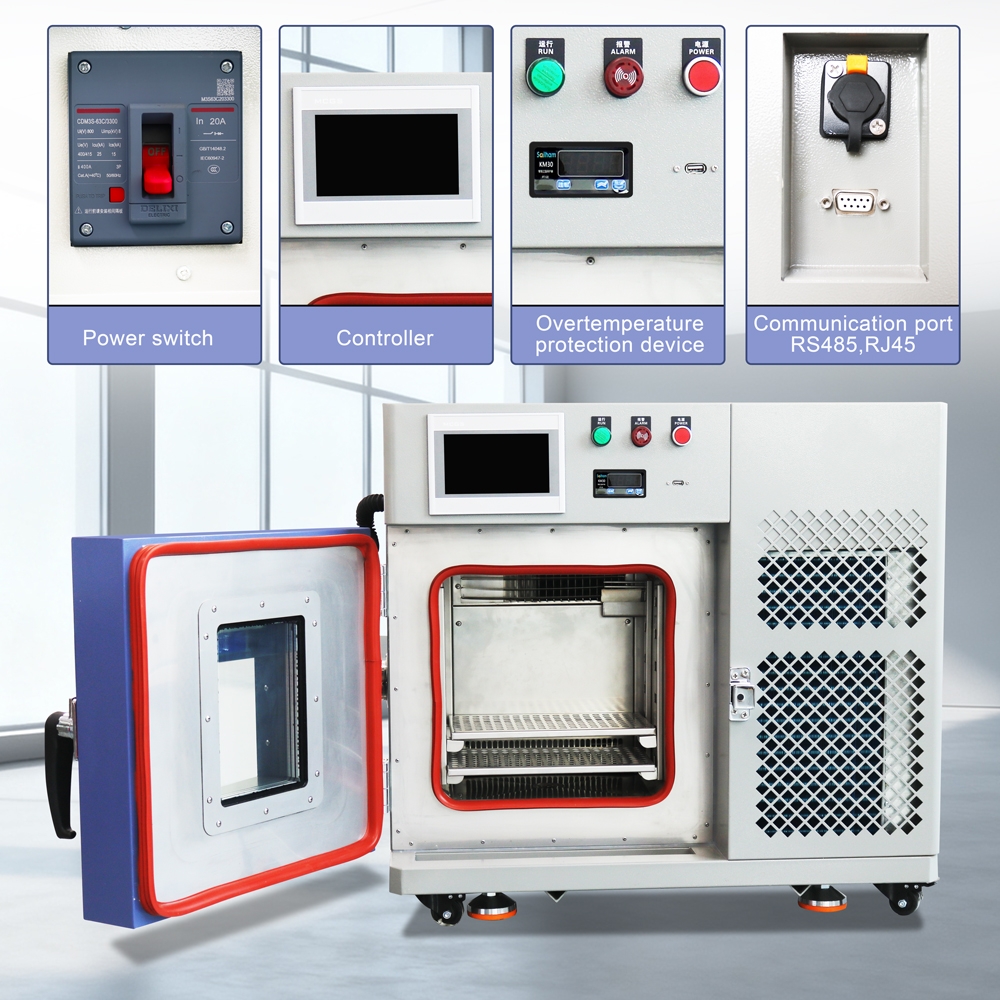
Advanced Controllers | Programmable touchscreen PLCs with PID control loops. | Allows complex multi-step profiles and remote data logging. |
Refrigeration Systems | Cascade or single-stage compressor systems using eco-friendly refrigerants. | Enables rapid pull-down rates to sub-zero temperatures (down to -70℃). |
Humidification | Electrode steam or ultrasonic humidification combined with capacitive sensors. | Ensures precise relative humidity (RH) control from 10% to 98%. |
Material Integrity | High-grade SUS304 or SUS316 stainless steel interiors with robust insulation. | Prevents structural warping, corrosion, and thermal leakage over decades of use. |
Critical Selection Criteria for Engineers
Selecting the appropriate climate test chamber requires a precise alignment between the testing goals and the equipment's physical limitations.
1. Temperature Range and Ramp Rates
Engineers must evaluate the required minimum and maximum temperatures. Equally important is the ramp rate (expressed in ℃/min). Rapid thermal transition rates (e.g., 5℃/min to 15℃/min) are essential for Environmental Stress Screening (ESS) to trigger infant mortality failures in electronics, whereas standard stability testing requires much slower, gentler transitions.
2. Internal Volume and Heat Dissipation
The size of the chamber should accommodate the test specimen without restricting essential airflow. Furthermore, if the device under test (DUT) is "live" or active, it will dissipate heat. The chamber’s refrigeration system must have enough excess cooling capacity to counteract this internal heat load and maintain the desired temperature profile.
3. Airflow and Uniformity
Uniform airflow distribution inside the working workspace is vital. Poor air circulation creates localized microclimates, leading to inconsistent test results. Premium chambers utilize optimized conditioning plenums and adjustable baffles to ensure laminar airflow across all test shelves.
Conclusion: Partnering with a Reliable Manufacturer
A climate test chamber is far more than an insulated box with a heater and a compressor; it is a highly engineered precision instrument that validates the safety and viability of tomorrow's technology. For manufacturers, investing in robust, compliant, and highly accurate environmental test equipment is the ultimate safeguard against costly product recalls and structural failures.
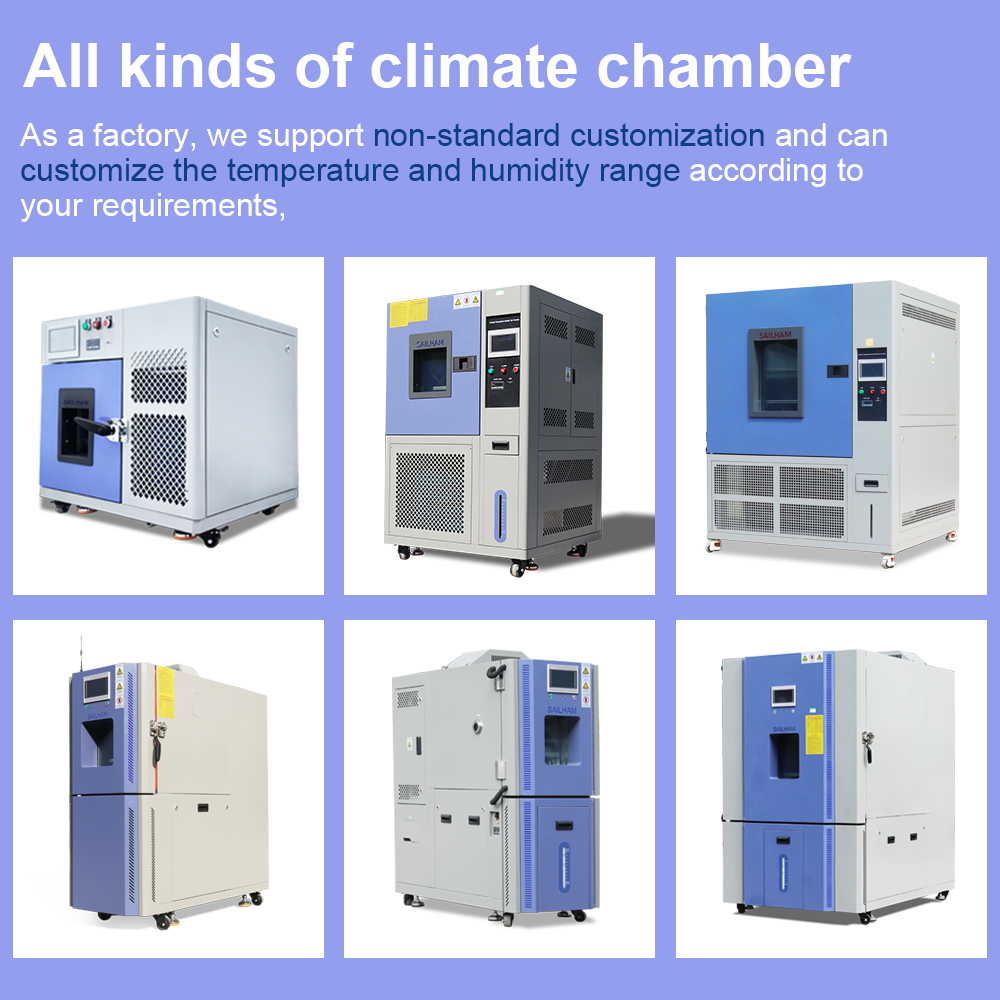
As a dedicated manufacturer of environmental testing solutions, we specialize in engineering high-performance climate chambers designed to meet strict international testing benchmarks. Contact our engineering team today to discuss your specific custom testing profiles and build a reliable testing infrastructure.
Phone
+86 13018663273
carleen@sailham.com