
Reliable Test Equipment Manufacturer
Reliable Test Equipment Manufacturer
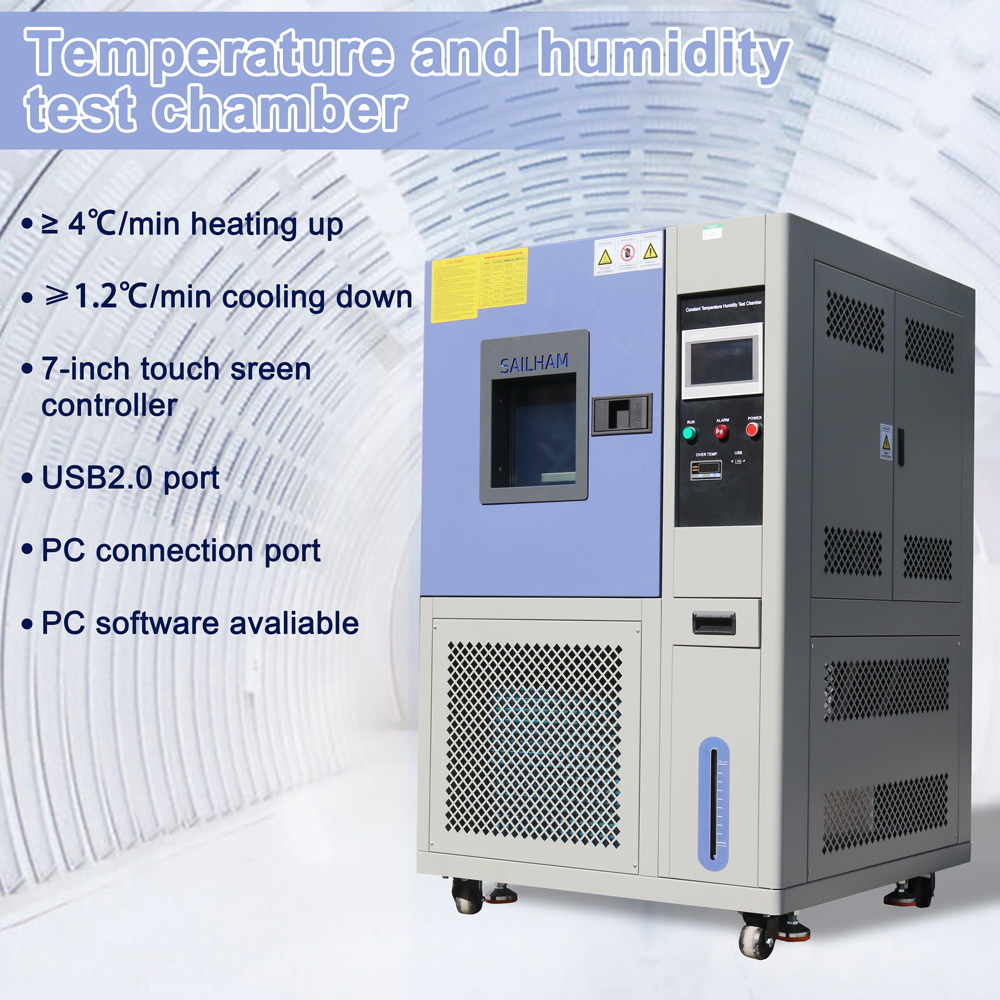
In modern engineering, a product’s laboratory performance means little if it can’t survive the unpredictable climates of the real world. From tropical monsoons to arid deserts, environmental stress is a leading cause of premature failure, warranty claims, and brand damage. The Climate chamber, commonly referred to as a climatic test chamber, has emerged as a foundational tool for environmental validation. By precisely replicating and accelerating complex climate conditions, these chambers enable manufacturers to predict product behavior, optimize designs, and meet stringent global compliance standards before mass production begins.
Electronics and Semiconductor Validation
Moisture and heat are among the most destructive forces in electronics. High humidity accelerates electrochemical migration, corrosion of copper traces, and degradation of solder joints. In plastic-encapsulated components, absorbed moisture can vaporize during reflow soldering, causing internal cracking known as the “popcorn” effect. Climate temperature humidity chambers are routinely used to execute standardized reliability protocols such as IEC 60068-2-78 (damp heat steady-state) and JEDEC JESD22-A101. By subjecting PCBs, sensors, and consumer devices to controlled environments like 85°C/85% RH, engineers can identify weak conformal coatings, validate hermetic seals, and refine thermal management strategies. This accelerated aging process compresses years of field exposure into weeks, dramatically shortening time-to-market while reducing field failure rates.
Automotive and New Energy Vehicle (NEV) Testing
The automotive industry’s shift toward electrification has intensified the demand for rigorous climate testing. Lithium-ion battery packs, power electronics, and advanced driver-assistance systems (ADAS) must maintain performance and safety across extreme temperature and humidity ranges. Climate temperature humidity chambers simulate conditions from -40°C cold storage to 60°C tropical humidity, enabling engineers to evaluate cell swelling, connector corrosion, electrolyte degradation, and thermal runaway thresholds. Compliance with standards such as ISO 16750-4, GMW3172, and UN 38.3 is mandatory for global vehicle homologation. By running cyclic humidity-temperature profiles and condensation tests, automakers ensure that EV components deliver consistent range, safety, and longevity regardless of geographic deployment.
Pharmaceuticals and Medical Device Stability
In healthcare, environmental control is a matter of patient safety. Active pharmaceutical ingredients, biologics, vaccines, and diagnostic reagents are highly sensitive to temperature and relative humidity fluctuations. Climate temperature humidity chambers form the backbone of ICH Q1A(R2) stability testing, where drug products are stored under precisely controlled conditions (e.g., 25°C/60% RH for long-term stability or 40°C/75% RH for accelerated studies) to determine shelf life, optimal packaging, and storage guidelines. Medical device manufacturers similarly rely on these chambers to validate sterile barrier systems, ensure adhesive integrity in wearable monitors, and verify that implantable devices remain biocompatible and functional throughout their intended lifecycle.
Aerospace, Defense, and Advanced Materials
Mission-critical aerospace and defense equipment cannot afford environmental surprises. Avionics, satellite payloads, and composite airframes face rapid thermal cycling, prolonged ground humidity, and altitude-induced condensation. Climate temperature humidity chambers replicate these stresses to verify compliance with MIL-STD-810H and RTCA DO-160. In materials science, polymers, adhesives, textiles, and protective coatings undergo damp heat and cyclic humidity testing to assess hydrolysis resistance, dimensional stability, and mechanical strength retention. By simulating synergistic temperature-humidity degradation, R&D teams can reformulate compounds, predict service life, and prevent catastrophic in-service failures.
Packaging and Supply Chain Resilience
Beyond product-level testing, climate chambers validate packaging integrity across global logistics networks. E-commerce goods, precision instruments, and perishable commodities face “container sweating,” warehouse humidity spikes, and seasonal transitions during transit. Engineers use climatic chambers to follow ISTA and ASTM packaging standards, simulating multi-day shipping cycles to evaluate moisture barrier performance, cushioning degradation, and label adhesion. This proactive approach minimizes transit damage, reduces returns, and ensures end-users receive products in pristine condition.
The climate chamber is far more than a testing appliance; it is a strategic engine for quality assurance, regulatory compliance, and innovation. Across electronics, automotive, healthcare, aerospace, and logistics, it provides the controlled environment necessary to translate design intent into real-world durability. As supply chains grow more global and sustainability standards tighten, the ability to predict and mitigate environmental degradation before launch has never been more critical. Investing in precise climatic simulation isn’t just about passing certification—it’s about building trust, ensuring safety, and delivering products engineered to endure.
Phone
+86 13018663273
carleen@sailham.com