
Reliable Test Equipment Manufacturer
Reliable Test Equipment Manufacturer
As electronic products, automotive systems, and advanced materials become increasingly complex, manufacturers are paying greater attention to reliability under sudden temperature changes. A Thermal Shock Test Chamber is an essential testing solution for evaluating how products respond when exposed to rapid transitions between high and low temperatures. In the coming years, improvements in testing technology and changing industrial requirements are expected to influence the development of thermal shock testing equipment.
1. Faster Temperature Transitions and Better Test Efficiency
One important direction for thermal shock test chamber development is improving temperature transition performance. Rapid temperature changes can reveal weaknesses that may not appear during conventional environmental testing, including material expansion differences, solder joint fatigue, component cracking, and structural stress.
Future Thermal Shock Test Chambers will continue to focus on efficient heat transfer, optimized chamber design, and stable temperature recovery. These improvements can help laboratories conduct demanding test programs while maintaining consistent testing conditions. However, actual transition times and temperature recovery performance depend on equipment configuration, specimen characteristics, and test requirements.
2. Growing Demand from Advanced Electronics and Automotive Industries
Electronic devices are becoming more compact, while automotive systems increasingly integrate sensitive electronic components. Electric vehicle control units, power electronics, sensors, semiconductor packages, connectors, and battery-related components may experience substantial temperature variations during operation or storage.
This creates continuing demand for thermal shock testing equipment that can evaluate component durability under repeated temperature transitions. Aerospace electronics, telecommunications equipment, industrial controllers, and advanced materials also represent important application areas.
As product designs evolve, manufacturers may require different chamber capacities, temperature ranges, transfer mechanisms, and customized fixtures to accommodate their specific samples.
3. Intelligent Control and Test Data Management
Digital control technology is becoming increasingly important in laboratory equipment. Modern thermal shock test chambers can incorporate programmable test sequences, temperature monitoring, alarm functions, and automatic data recording.
Future systems may provide more advanced remote monitoring, predictive maintenance support, and integration with laboratory information management systems. These capabilities can help operators review test histories, identify abnormal conditions, and organize test results more efficiently.
For laboratories conducting repeated reliability evaluations, improved data traceability can support quality management and make comparisons between test batches easier.
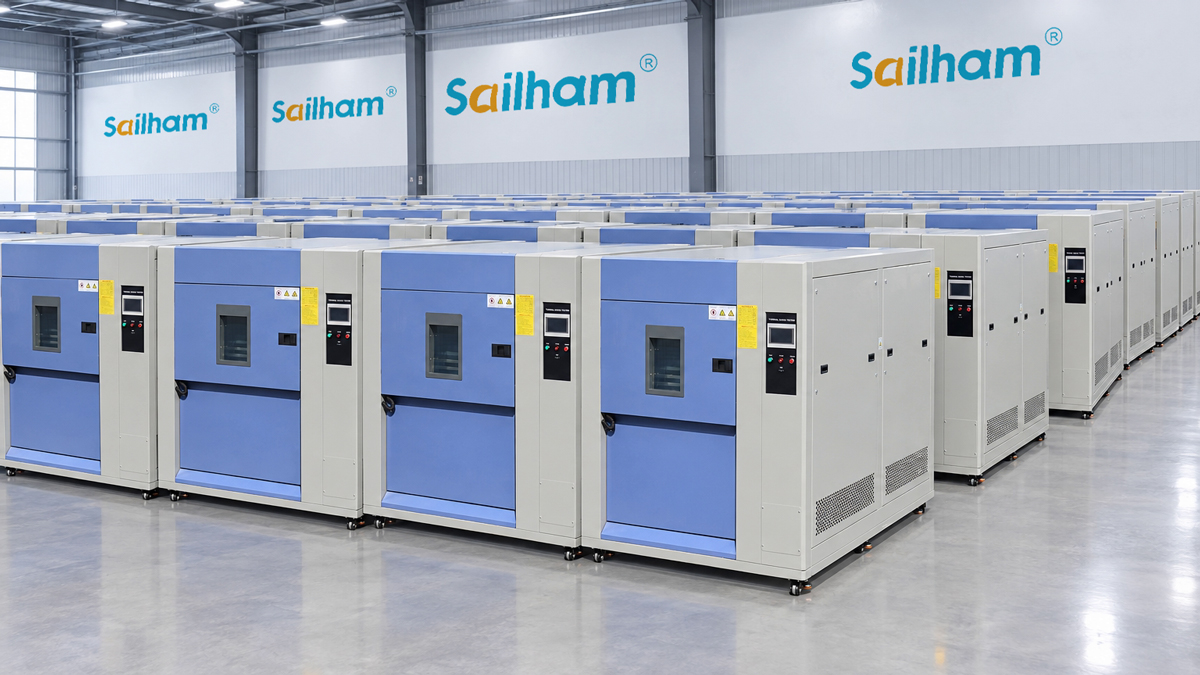
4. Energy Efficiency and Equipment Reliability
Thermal shock testing involves repeated heating and cooling, which can place considerable demands on refrigeration systems, heating components, insulation, and temperature control mechanisms.
Equipment development will therefore continue to emphasize efficient refrigeration design, improved insulation, durable components, and optimized operating strategies. Reducing unnecessary energy consumption while maintaining the required temperature performance will be an important consideration for laboratories managing frequent or long-term testing programs.
Maintenance accessibility and system stability will also remain important factors when evaluating the total cost of equipment ownership.
5. More Flexible Testing Solutions
Different products require different thermal shock profiles. Some applications prioritize extreme temperature ranges, while others require specific transfer times, dwell periods, or sample capacities.
Future Thermal Shock Test Chambers will increasingly need to accommodate diverse testing procedures through configurable test programs, flexible sample arrangements, and application-specific engineering. Selecting equipment based on the applicable test standard and actual specimen requirements will remain essential for obtaining meaningful results.
The future of thermal shock testing will be shaped by faster testing processes, expanding industrial applications, intelligent monitoring, improved energy efficiency, and flexible equipment configurations. A reliable Thermal Shock Test Chamber can help manufacturers identify temperature-related weaknesses, strengthen product development, and improve quality assurance.
For businesses investing in thermal shock testing equipment, important considerations include temperature range, transition performance, recovery time, specimen capacity, control accuracy, maintenance requirements, and technical support. Matching these capabilities to real testing needs will help laboratories build a more effective product reliability testing program.
Phone
+86 13018663273
carleen@sailham.com