
Reliable Test Equipment Manufacturer
Reliable Test Equipment Manufacturer
As product designs become more sophisticated, manufacturers need better ways to understand how environmental conditions influence product performance over time. A Temperature and Humidity Test Chamber provides a controlled environment for investigating these effects, helping engineers evaluate materials, components, and finished products before they reach the market. In the coming years, changing product requirements and increasingly demanding reliability expectations will shape the development of this essential testing equipment.
1. Greater Focus on Product Lifecycle Evaluation
Product quality is no longer assessed only through short-term performance checks. Manufacturers increasingly need to understand how products respond to prolonged exposure to moisture, temperature fluctuations, and changing storage conditions.
A Constant Temperature and Humidity Test Chamber can support long-term environmental exposure studies and accelerated testing programs. These tests help engineers investigate material aging, dimensional changes, corrosion risks, insulation deterioration, and other environmental effects.
In the future, testing programs are likely to become more closely connected with product lifecycle planning. By identifying weaknesses earlier, manufacturers can refine material selection, improve protective structures, and make better-informed design decisions.
2. More Application-Specific Testing Solutions
Different industries have different environmental testing requirements. Electronic components may require precise humidity control, while automotive parts may need testing across wider temperature ranges. Packaging materials, polymers, coatings, and precision instruments also respond differently to climatic exposure.
Consequently, demand for application-specific Temperature and Humidity Testing Equipment is expected to remain an important market consideration. Rather than relying on a single standard configuration, laboratories may prioritize chamber capacity, temperature range, humidity range, sample loading, and control functions that match their individual test procedures.
Flexible equipment configurations can help testing facilities accommodate changing product designs without unnecessarily increasing operational complexity.
3. Integration with Broader Reliability Testing Programs
Environmental conditions rarely act alone in real-world applications. Temperature and moisture can interact with vibration, electrical loading, mechanical stress, and other operating factors.
This creates opportunities for closer integration between Environmental Test Chambers and broader reliability testing workflows. For example, engineers may combine temperature and humidity exposure with separate vibration or electrical performance evaluations to gain a more complete understanding of product durability.
Although combined testing requirements vary by industry, coordinated testing strategies can help manufacturers investigate failure mechanisms and develop more robust products.
4. Stronger Emphasis on Test Repeatability and Data Quality
Reliable engineering decisions depend on trustworthy test results. Differences in chamber loading, sensor placement, airflow, calibration, and operating procedures can influence the quality of environmental testing.
Future chamber development will therefore continue to emphasize consistent environmental conditions, dependable measurement systems, convenient calibration, and effective test record management. Laboratories will also need clear operating procedures to ensure that repeated tests produce comparable results.
For quality assurance teams, these capabilities can improve confidence in test data and support more systematic product evaluation.
5. Preparing Laboratories for Future Requirements
As new materials, electronic architectures, and energy technologies enter the market, environmental testing requirements will continue to change. Laboratories must consider not only their current workload but also the types of products they may need to evaluate in the future.
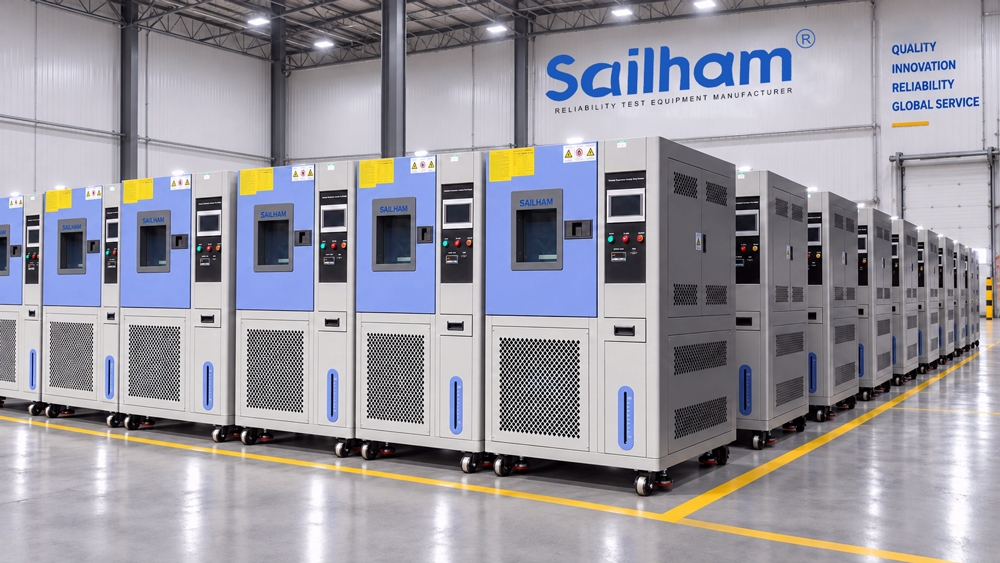
When selecting a Temperature and Humidity Test Chamber, buyers should assess operating ranges, temperature uniformity, humidity control performance, internal dimensions, safety functions, maintenance requirements, and available technical support. The ability to configure equipment around specific testing procedures can be just as important as headline specifications.
The future of temperature and humidity testing will be shaped by more comprehensive product evaluation, application-driven equipment design, stronger test repeatability, and closer integration with reliability engineering. A well-selected Temperature and Humidity Test Chamber can help manufacturers investigate environmental risks, improve product development decisions, and establish dependable quality control processes.
As industrial requirements continue to evolve, laboratories that align their testing capabilities with real product conditions will be better prepared to evaluate durability and support long-term product performance.
Phone
+86 13018663273
carleen@sailham.com