
Reliable Test Equipment Manufacturer
Reliable Test Equipment Manufacturer
As manufacturers continue to develop products for increasingly demanding operating environments, reliable environmental testing has become an important part of product development and quality assurance. In this changing environment, the temperature humidity stability chamber is receiving greater attention for its ability to provide controlled and repeatable climatic conditions.
From electronics and automotive components to batteries, photovoltaic equipment, communication devices, and industrial materials, many products must maintain stable performance when exposed to temperature and humidity variations. Laboratory testing allows engineers to simulate these conditions under controlled circumstances and evaluate potential reliability risks before products enter the market.
Stability Becomes a Key Testing Requirement
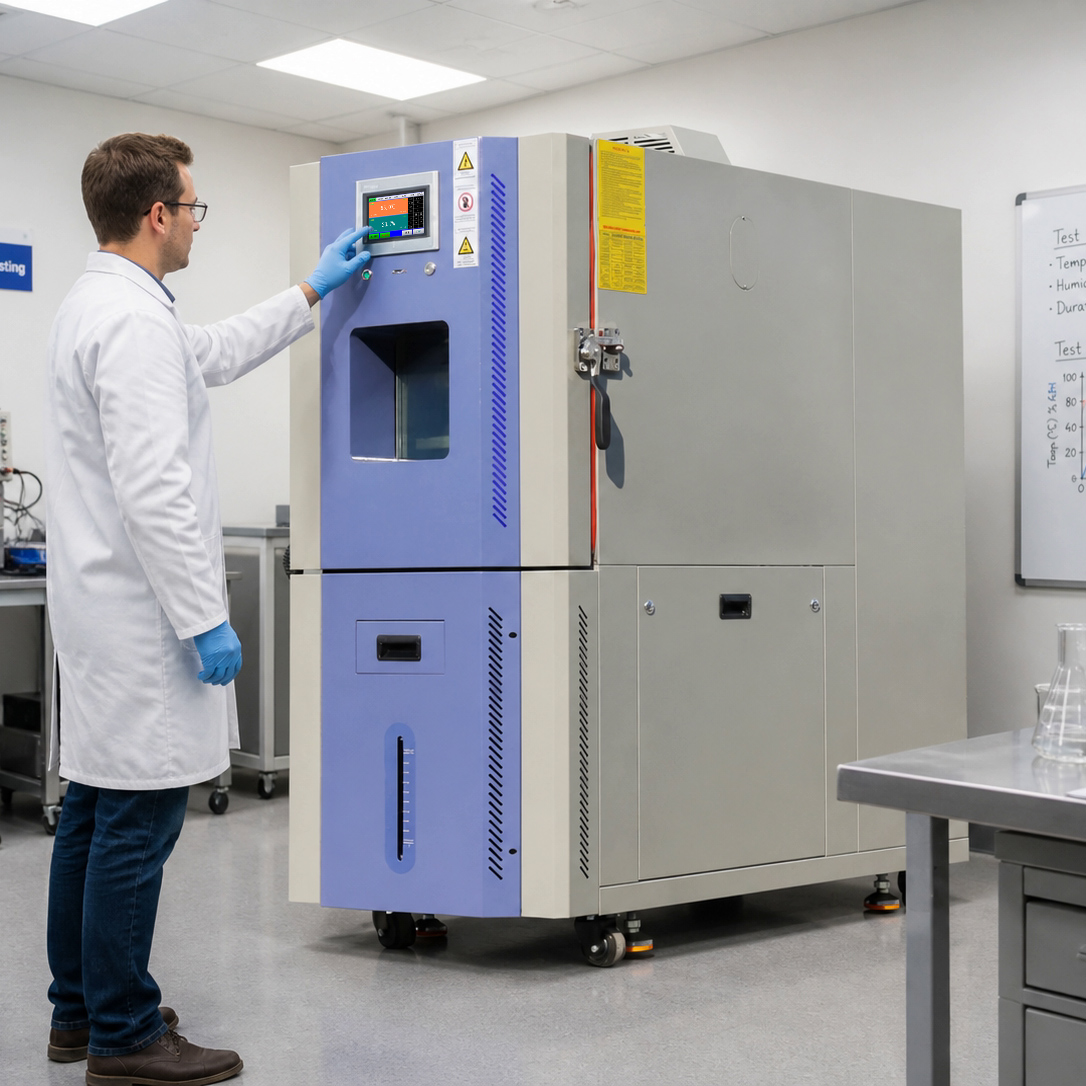
A temperature humidity stability chamber is designed to maintain predetermined temperature and relative humidity conditions over a specified testing period. Stable environmental conditions are particularly important when laboratories need to compare test results between different products, materials, or development stages.
Changes in temperature and humidity can influence electrical performance, material properties, corrosion resistance, insulation, sealing, and component durability. By controlling these environmental factors, engineers can study product behavior and identify potential weaknesses more efficiently.
For manufacturers, the objective is not simply to expose a product to extreme conditions. More importantly, the test environment needs to remain sufficiently stable and repeatable so that the resulting data can support meaningful engineering decisions.
Applications Across Modern Industries
The use of a temperature humidity stability chamber extends across many manufacturing sectors. Electronics companies can use climatic testing to evaluate circuit boards, sensors, connectors, displays, and other sensitive components. Automotive manufacturers may test electrical systems and materials under controlled temperature and humidity conditions.
The equipment can also support testing for batteries, renewable energy products, industrial equipment, plastics, coatings, packaging, and other materials. Depending on the application, testing programs may include steady-state humidity exposure, temperature cycling, or combined temperature and humidity conditions.
Supporting Better Product Development
As product reliability requirements continue to increase, environmental testing is moving further into the early stages of research and development. Controlled climatic testing can help engineers identify potential design weaknesses, select suitable materials, and evaluate protective measures before mass production.
For laboratories selecting a temperature humidity stability chamber, important considerations include temperature and humidity ranges, stability and uniformity, chamber capacity, control accuracy, test programming, safety features, and applicable testing standards.
With environmental reliability becoming increasingly important across global industries, stable temperature and humidity simulation will continue to play an important role in product development and quality verification. A reliable temperature humidity stability chamber provides manufacturers with a controlled platform for generating consistent environmental test data and supporting products designed for demanding real-world conditions.
Phone
+86 13018663273
carleen@sailham.com