
Reliable Test Equipment Manufacturer
Reliable Test Equipment Manufacturer
As manufacturers face increasing expectations for product reliability, environmental durability, and consistent quality, environmental testing is becoming a more important part of modern product development. This trend is creating new attention around the environmental test chamber, particularly equipment capable of accurately simulating temperature and humidity conditions.
From electronic components and automotive systems to batteries, photovoltaic products, communication equipment, and industrial materials, many products must operate reliably under changing environmental conditions. Laboratory environmental testing provides manufacturers with a controlled way to evaluate these potential risks before products reach the market.
Environmental Testing Moves Beyond Basic Inspection
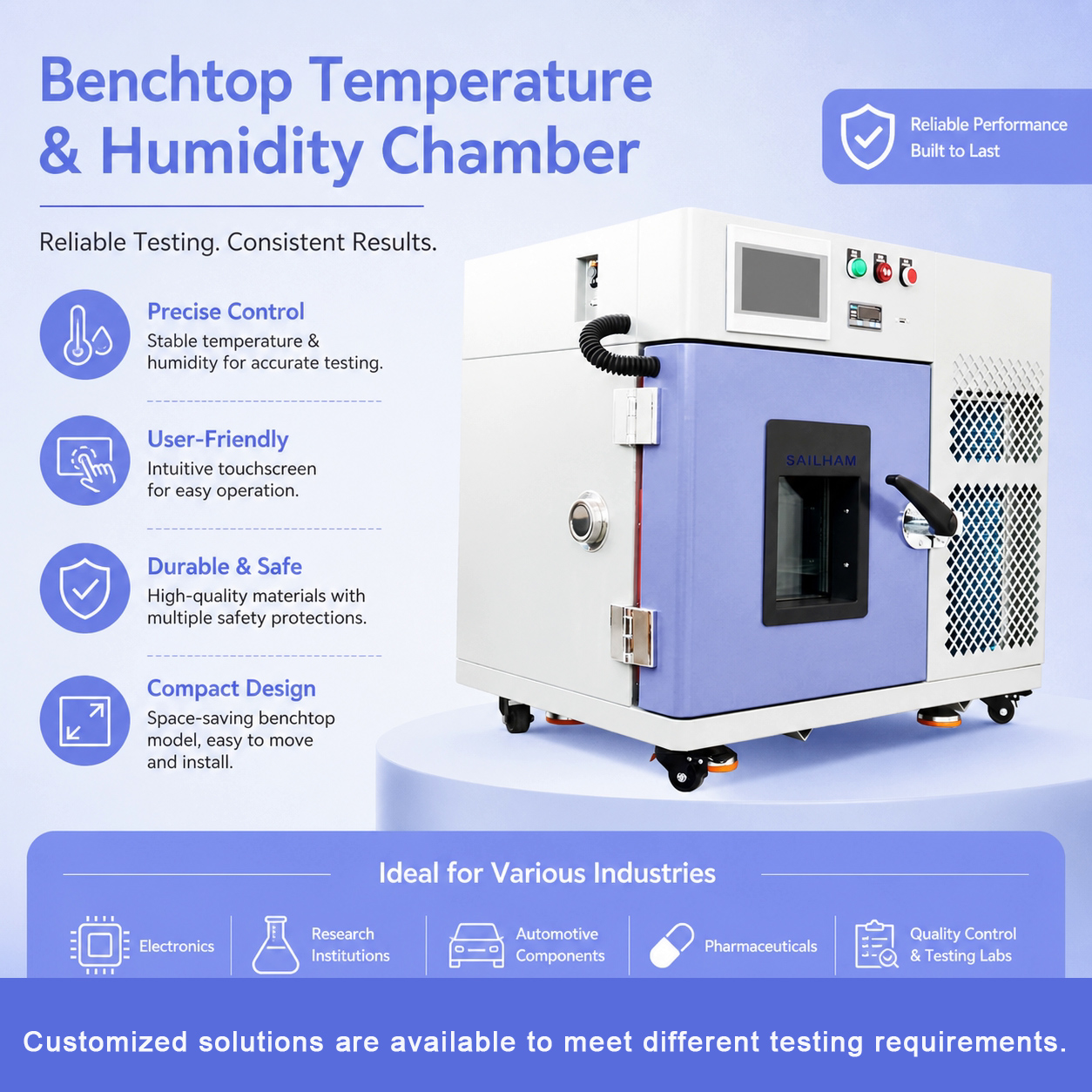
An environmental test chamber is used to reproduce controlled environmental conditions for product testing. Depending on the chamber configuration, testing can involve temperature, humidity, thermal cycling, or other climatic stresses.
For temperature and humidity testing, manufacturers can expose samples to predefined climatic conditions for a specific period and monitor changes in performance. This can help identify issues such as moisture-related degradation, corrosion, insulation problems, material aging, and temperature-induced performance changes.
The value of this approach is particularly important during product development. Instead of relying solely on field testing, engineers can create repeatable laboratory conditions and compare results between different materials, components, and product designs.
Applications Continue to Expand
Today, an environmental test chamber can support testing throughout the product development cycle. Electronics manufacturers may use climatic testing to evaluate components and assemblies, while automotive companies can assess sensors, connectors, electrical systems, and materials.
The same testing approach can also support battery development, renewable energy equipment, aerospace components, industrial products, plastics, coatings, and packaging materials.
Reliability Becomes a Key Testing Priority
As products become more sophisticated, manufacturers need environmental testing equipment that can provide stable conditions, accurate control, repeatable test profiles, and reliable long-term operation.
The growing emphasis on chamber performance and updated testing standards demonstrates that environmental testing is becoming more than a final inspection procedure. It is increasingly part of product design, reliability engineering, and quality assurance.
For manufacturers, selecting the right environmental test chamber based on test requirements, product dimensions, environmental conditions, applicable standards, and expected testing frequency can help generate more consistent data and support better product development decisions.
As global industries continue to raise reliability expectations, environmental test chambers are expected to remain an essential tool for evaluating product performance under controlled climatic conditions.
Phone
+86 13018663273
carleen@sailham.com