
Reliable Test Equipment Manufacturer
Reliable Test Equipment Manufacturer
As manufacturers face growing demands for product reliability, durability, and environmental performance, the use of climate test chambers is becoming increasingly important across industries. From electronics and automotive components to batteries, aerospace systems, and new energy products, manufacturers are placing greater emphasis on testing how products perform under controlled temperature and humidity conditions.
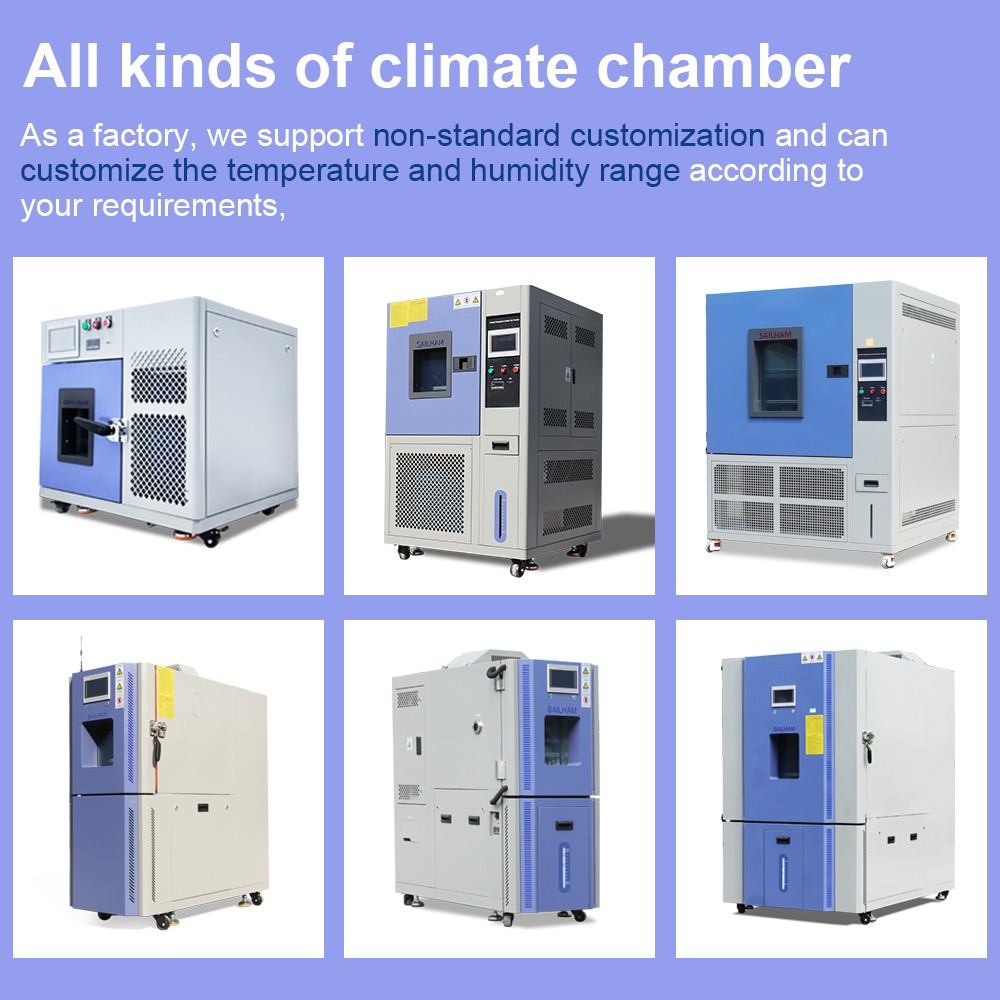
A climate test chamber, also known as a temperature and humidity test chamber or environmental test chamber, is designed to simulate controlled climatic conditions. By exposing products to different temperature and humidity levels, engineers can identify potential performance problems before products enter the market.
Growing Demand for Environmental Testing
The global environmental test chamber market continues to develop as manufacturers invest more in reliability testing and product quality. Market research indicates that temperature and humidity chambers represent a significant segment of the environmental testing equipment market, driven by applications in electronics, automotive, aerospace, healthcare, and other industries.
One major factor behind this trend is the increasing complexity of modern products. Electronic components, batteries, sensors, communication equipment, and automotive systems may operate in environments ranging from very dry conditions to high humidity and extreme temperatures. Laboratory testing allows manufacturers to reproduce these conditions in a controlled and repeatable way.
More Attention to Chamber Performance
Accuracy and repeatability are becoming key considerations when selecting a climate test chamber. Stable temperature control, uniform humidity distribution, reliable sensors, efficient refrigeration systems, and programmable test profiles can all affect the quality of test results.
The International Electrotechnical Commission (IEC) has also continued to update guidance related to environmental testing. In June 2026, IEC published a pre-release version of IEC 60068-3-6:2026, which provides guidance for confirming the performance of temperature and temperature/humidity chambers used with climatic test procedures.
This development highlights the industry's continued focus on reliable chamber performance and reproducible testing conditions.
Climate Testing Supports Product Development
Modern temperature and humidity test chambers are not limited to final quality inspection. They are increasingly used during research and development, design verification, reliability testing, and failure analysis.
By conducting controlled environmental tests at an early stage, manufacturers can discover weaknesses in materials, components, assemblies, and finished products. This can help engineering teams improve product design and reduce the risk of failures during real-world use.
As global manufacturing continues to move toward higher reliability and stricter quality requirements, climate testing is expected to remain an important part of the product development process.
For manufacturers looking for reliable environmental testing equipment, selecting a climate test chamber with appropriate temperature and humidity ranges, control accuracy, chamber capacity, safety functions, and testing standards is essential. The right testing system can provide valuable data for improving product reliability and supporting consistent quality.
Phone
+86 13018663273
carleen@sailham.com