
Reliable Test Equipment Manufacturer
Reliable Test Equipment Manufacturer
As industrial products continue to enter more demanding operating environments, environmental reliability testing has become an important part of product development and quality management. The high and low temperature low pressure test chamber is designed to simulate temperature extremes and reduced atmospheric pressure, helping engineers evaluate product performance under challenging environmental conditions.
Why Combined Environmental Testing Matters
Electronic components, aerospace-related equipment, communication devices, and precision instruments may experience significant temperature and pressure changes during transportation, storage, or operation. These environmental factors can influence material properties, component performance, sealing integrity, and overall product reliability.
Testing temperature and pressure conditions together allows engineers to investigate potential weaknesses that may not be identified through individual environmental tests alone. A high low temperature low pressure environmental test chamber provides a controlled setting for evaluating how products respond to these combined stresses. The results can help manufacturers improve product design, refine material selection, and strengthen quality inspection procedures.
Simulating Temperature and Reduced Pressure
A temperature altitude test chamber combines temperature regulation with reduced-pressure simulation according to the selected equipment configuration. Temperature cycling can expose products to repeated heating and cooling, while low-pressure testing helps assess their response to reduced atmospheric pressure.
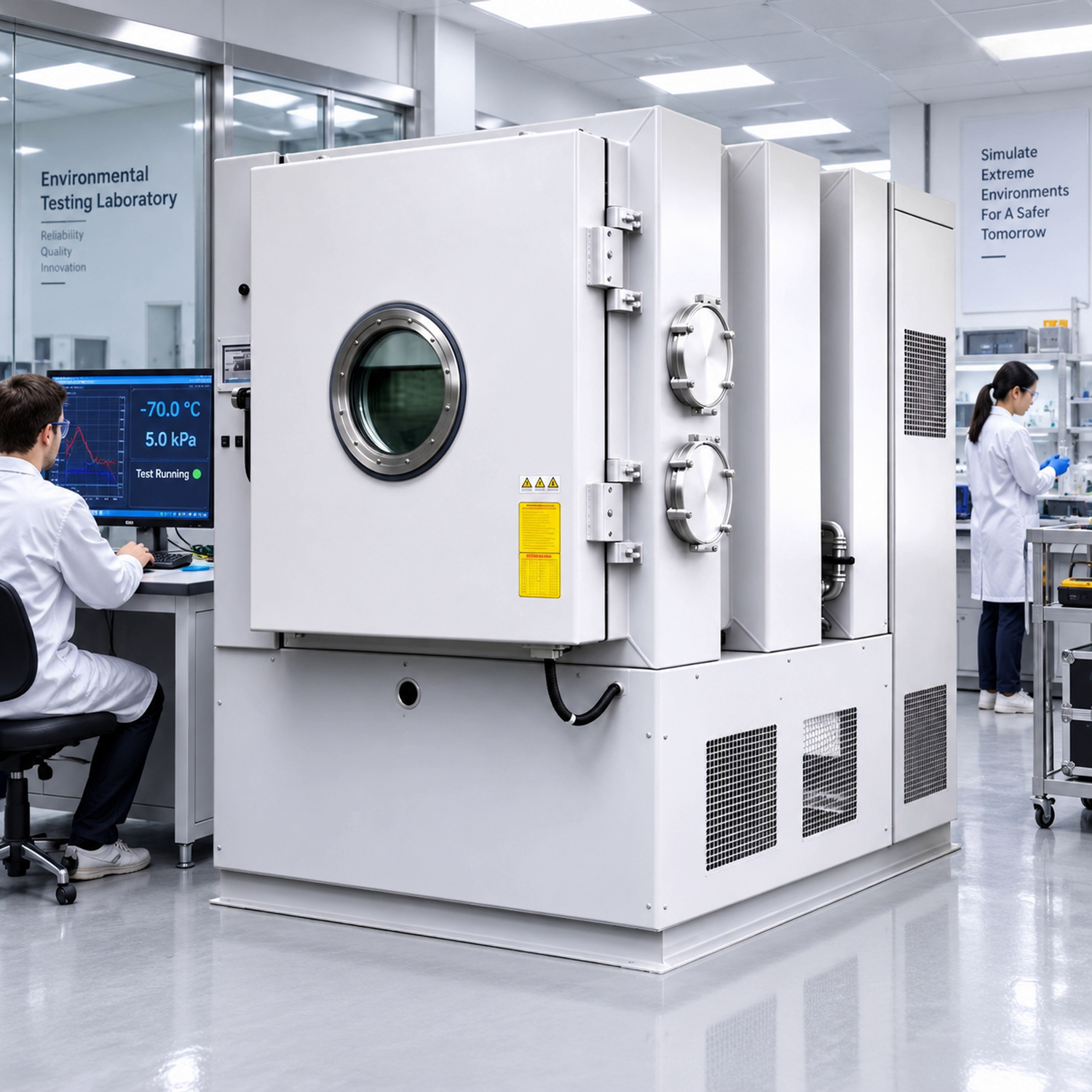
These capabilities are relevant to products intended for use in high-altitude locations, air transportation, and other applications where environmental pressure may differ from normal atmospheric conditions. Test conditions should be selected according to the product's intended environment and applicable testing requirements.
The temperature low pressure test chamber can support environmental evaluation for electronic assemblies, electrical equipment, sensors, communication products, and other industrial components. The appropriate temperature range, pressure range, transition rate, and test duration depend on the product specifications and the required test procedure.
Improving Testing Efficiency Through Integrated Systems
Integrating temperature and low-pressure functions into one chamber can simplify test arrangements and reduce the need to transfer samples between separate pieces of equipment. Programmable controls, where included, can help users manage test stages and maintain defined environmental conditions throughout the procedure.
For laboratories, this integrated approach can support more organized testing workflows and provide useful information for product verification and reliability assessment. Equipment selection should consider chamber capacity, temperature performance, achievable pressure, control accuracy, safety features, and compatibility with the intended samples.
Applications Across Industrial Sectors
High and low temperature low pressure testing is particularly relevant to aerospace-related products, electronic components, electrical systems, precision instruments, and equipment designed for transportation or elevated-altitude environments. It can contribute to research and development, design verification, quality control, and reliability testing.
As products become more complex, manufacturers increasingly need testing methods that reflect the environmental stresses their products may encounter. The high and low temperature low pressure test chamber offers a practical tool for investigating product behavior under combined thermal and reduced-pressure conditions.
By selecting suitable test parameters and following applicable standards, laboratories can use environmental simulation to support informed engineering decisions, improve product validation, and strengthen confidence in product quality.
Phone
+86 13018663273
carleen@sailham.com