
Reliable Test Equipment Manufacturer
Reliable Test Equipment Manufacturer
Ultraviolet rays not only pose harm to the human body, but also the damage they cause to products should not be underestimated! During the processing, storage or use of materials or products, due to the influence of external factors such as heat, light, oxygen, mechanical stress, ozone, harmful metal ions, and radiation, physical or chemical changes occur within the materials, leading to performance deterioration and gradual loss of their usability.
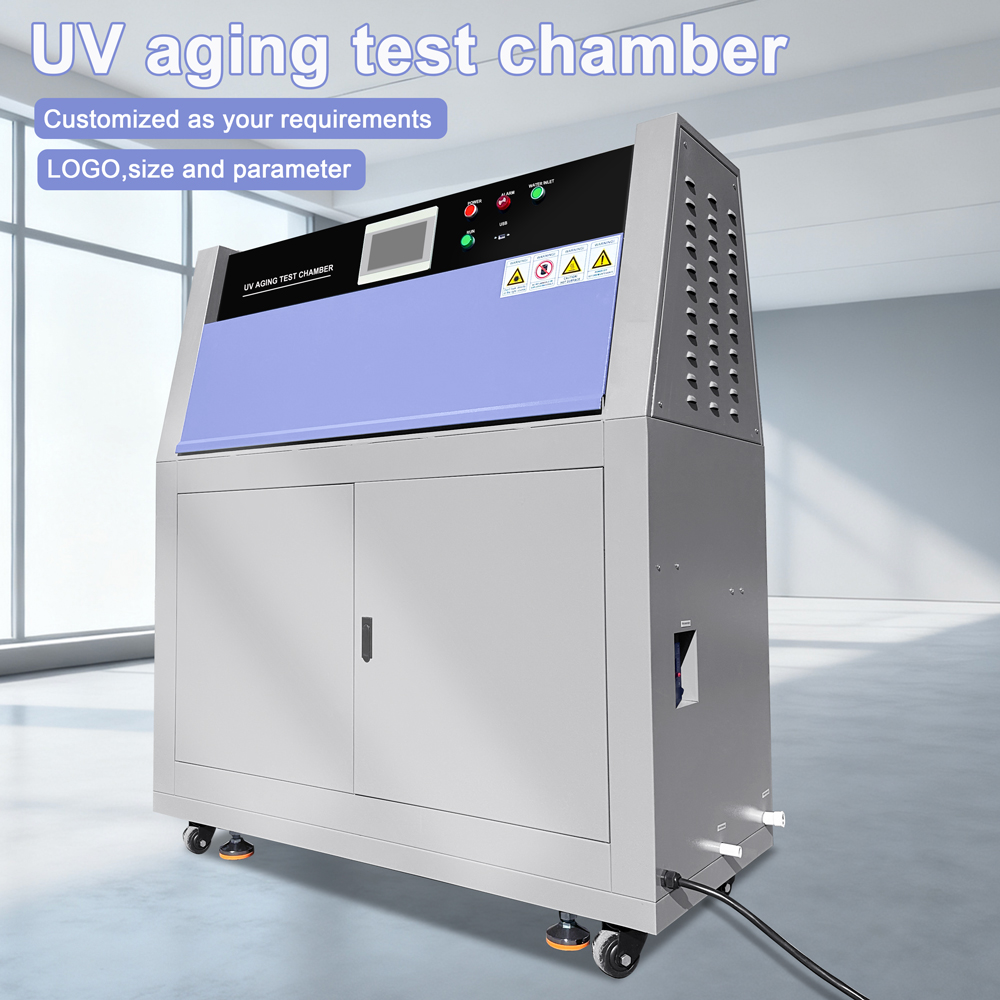
The types of damage caused by ultraviolet rays include fading, loss of luster, chalking, cracking, splitting, blurring, bubbling, embrittlement, reduction in strength and oxidation, etc.
The product fields involved are also very extensive, such as: rubber, plastics and their products, coatings, paints, dyes, fabrics, printing and packaging, adhesives, metals, electronics, electroplating, cosmetics, etc.
Ultraviolet rays in sunlight are the main cause of product photodegradation and photolysis. This is because shorter wavelengths carry higher energy and have stronger penetrating power. In the solar spectrum, ultraviolet rays are precisely the ones with shorter wavelengths. At this time, ultraviolet aging tests can be used to assess the lifespan of the product, thereby ensuring its quality.
Ultraviolet (UV) aging testing is a method for evaluating the resistance of new materials to ultraviolet light. It is usually conducted in a laboratory using an ultraviolet accelerated aging test chamber. Within just a few weeks or months, reproducible and reliable aging test data can be obtained through ultraviolet aging tests; the short-wavelength ultraviolet light and condensation cycle system can realistically simulate the destructive effects of sunlight, dew, and rain on materials.
The ultraviolet aging test mainly simulates the deterioration effect of ultraviolet light in sunlight on the product.
At the same time, it can also reproduce the damage caused by rain and dew.
The test is conducted by exposing the material to a controlled alternating cycle of sunlight and moisture, while increasing the temperature; ultraviolet fluorescent lamps are used to simulate sunlight, and moisture effects can also be simulated through condensation or spraying.
Common types of UV lamps
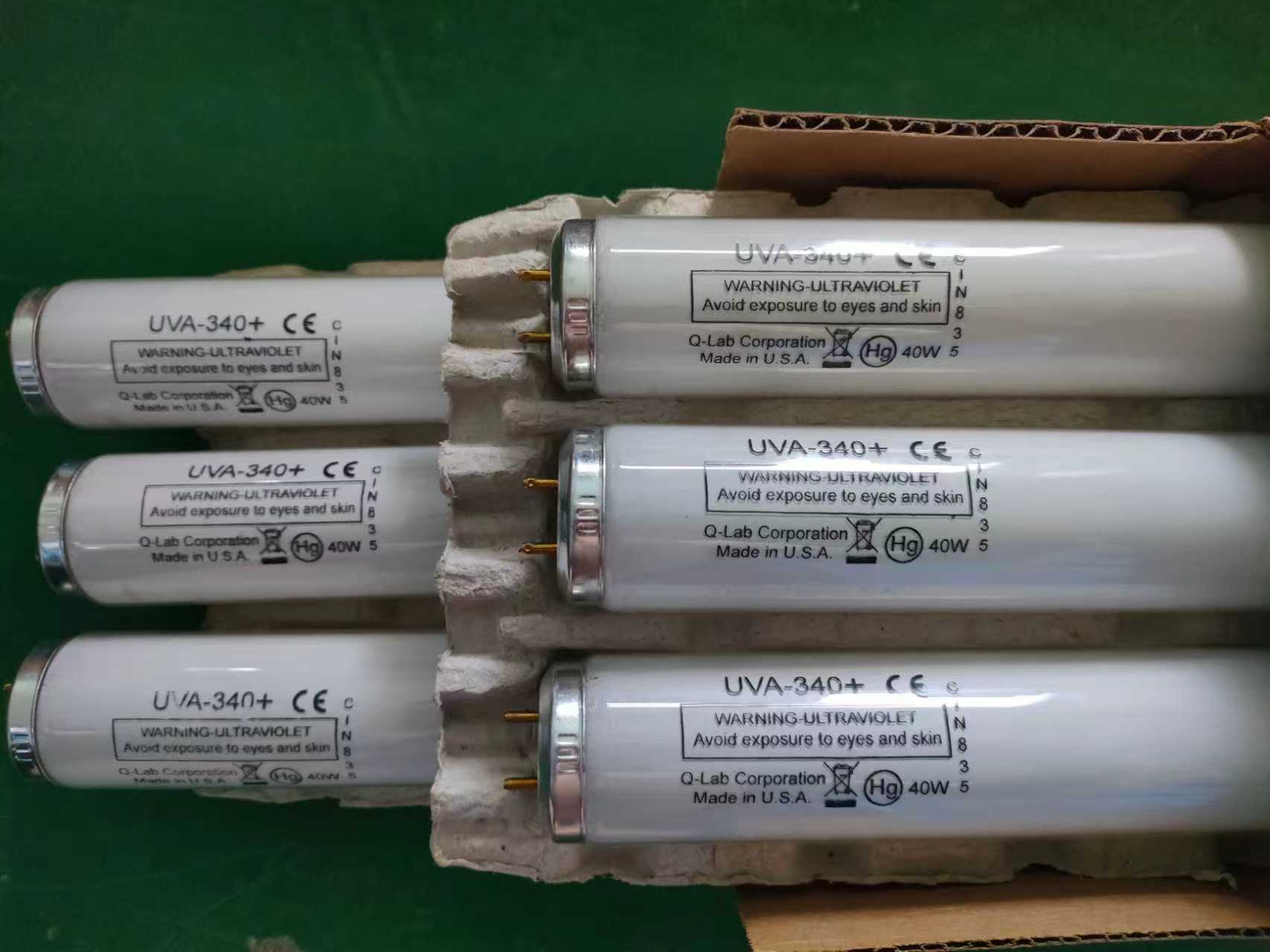
UVA-340 simulates the ultraviolet rays in sunlight and is mainly used for the light aging tests of outdoor products.
UVA-351 simulates the ultraviolet portion of sunlight that passes through window glass, and is mainly used for light aging tests of indoor products.
UVB-313EL: Widely used for rapid and time-saving tests of durable materials, it accelerates the aging of the materials and sometimes leads to abnormal results. Consent from the customer must be obtained before its use.
Testing method:
Irradiance: 0.89W/m²; Wavelength: 340nm; Exposure period: UV irradiation for 8 hours at a temperature of (60 ± 3℃) on a black panel.
Condensation for 4 hours at a temperature of (50 ± 3)℃ of the black panel;
Duration: 100 hours;
A portion of the sample was covered with aluminum foil, while the other part was left exposed. After the test, the gray sample cards were compared with the covered and exposed parts to determine the gray card grades.
Ultraviolet aging test case: The samples submitted by the customer were several pieces of a certain PVC material, which were used as window glass films. An ultraviolet aging test was conducted to verify the reliability of the product.
Testing environment: Ambient temperature 24.2℃, humidity 53%RH
Testing standard: ASTM G-154-2016 Test Method Standard for Exposure of Non-metallic Materials to Ultraviolet Radiation from Fluorescent Equipment
The results show that after the test, there was no significant color change on the surface of the sample, meeting the reliability requirements under standard conditions.
The ultraviolet aging test can evaluate the ability of the product to withstand solar radiation and effects in an outdoor, unshaded environment. The test parameters include temperature, humidity, lamp type wavelength, radiation intensity, light-dark cycle, and duration.
Finally, since there are numerous standards for ultraviolet aging tests, and many of them are specific to certain types of products, we have summarized some general standards for your reference:
Testing equipment:
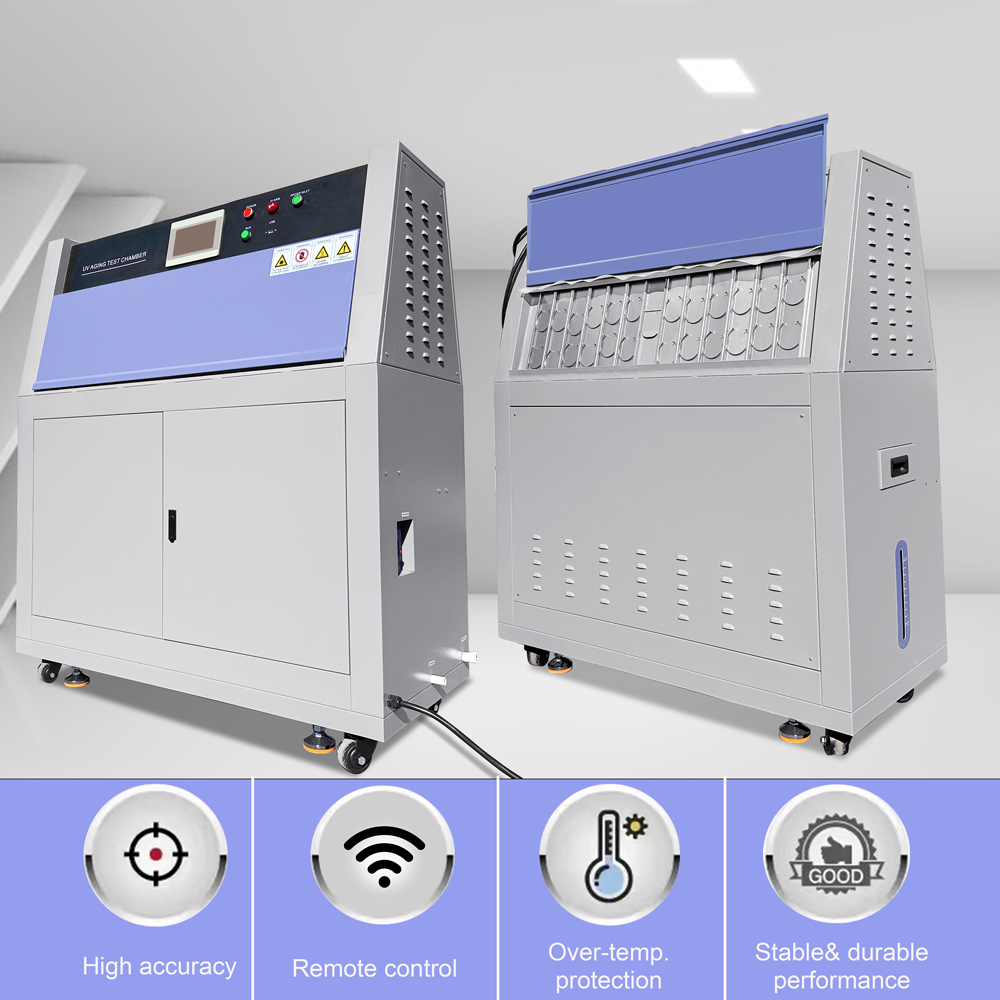
The Sailham UV aging acceleration test chamber uses special fluorescent ultraviolet lamps to simulate the sunlight exposure, and employs methods such as condensation humidity and water spraying to simulate dew and rain, truly reproducing the material damage caused by sunlight. The types of damage include fading, loss of luster, flaking, cracking, delamination, blurring, bubbling, brittleness, strength reduction and oxidation.
Some general standards for ultraviolet aging tests
ISO 4892-3 Plastic - Laboratory Light Source Exposure Test Method - Part 3: Fluorescent Ultraviolet Lamp
GBT 16422.3 - Laboratory Light Source Exposure Test Methods for Plastics - Part 3: Fluorescent Ultraviolet Lamp
ASTM G-151 - Test Method Standard for Exposure of Non-metallic Materials to Accelerated Testing Equipment with Laboratory Light Sources
ASTM G-154 Test Method Standard for Exposure of Non-metallic Materials to Ultraviolet Radiation from Fluorescent Equipment
British Standard BS 2782: Part 5 - Method 540B (Exposure Method for Laboratory Light Sources)
The SAE J2020 standard uses a fluorescent UV/condensation equipment to conduct accelerated exposure tests on automotive exterior components.
ASTM D4587 Cycle 4 Coating and Related Coatings Fluorescent Ultraviolet Condensation Exposure Procedure
-- Tell us your product to be tested, let us provide the full testing solutions for you.
Phone
+86 13794880254
carleen@sailham.com
Applets

Mobile station
Mobile station QR code